
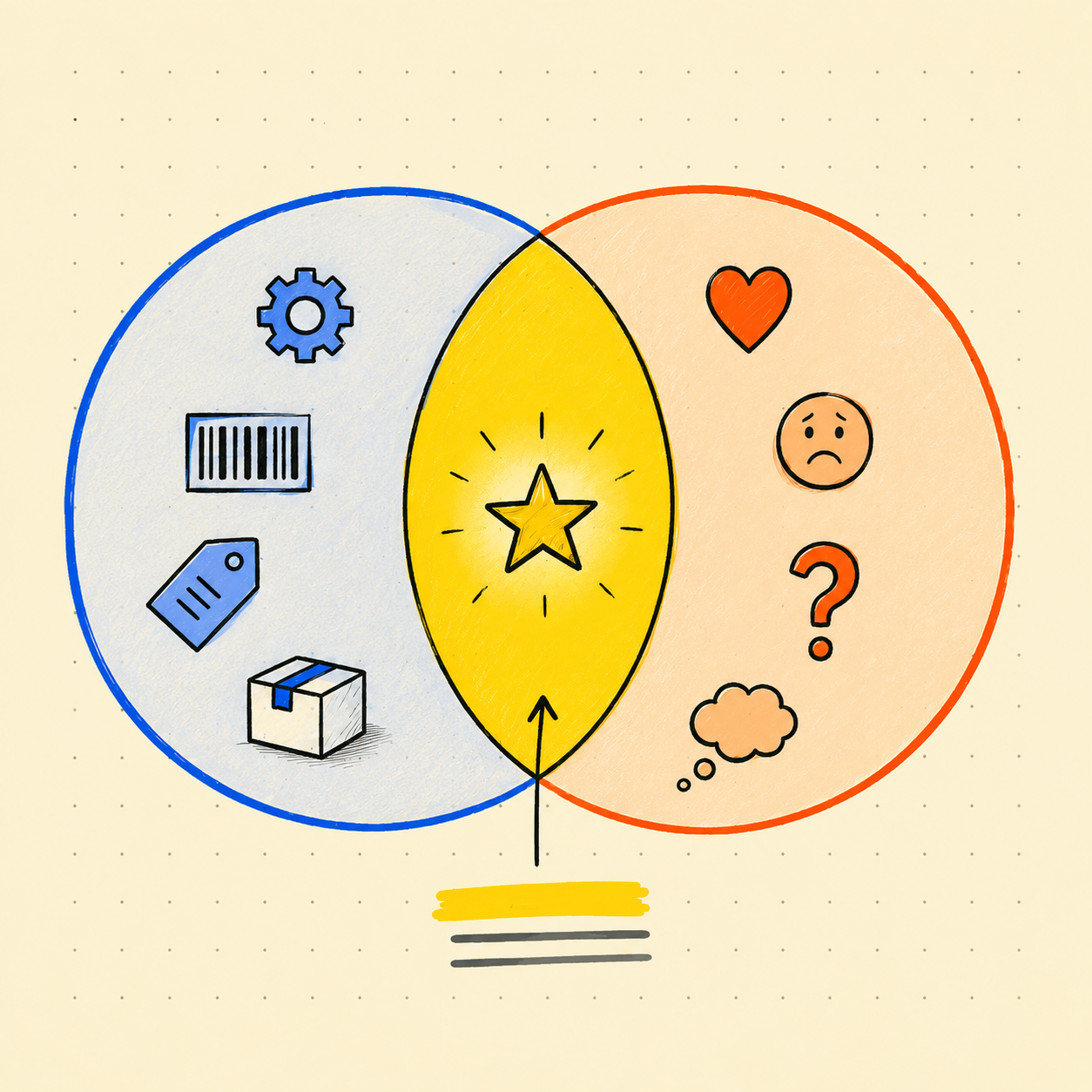
Two ads run on the same Instagram feed, on the same Tuesday afternoon, to the same person.
The first one says "Lose 5 kg in 30 days with our protein shake."
The second one says "Why your evening hunger isn't willpower | it's the 4pm crash, and three things fix it."
Both ads are selling the same protein shake. One of them flops. The other one converts.
The difference is not the offer. The difference is not the design. The difference is that one ad assumes the reader already knows they want a protein shake, and the other one meets the reader where they actually are | tired, irritable at 4pm, googling "why am I always hungry by evening."
This is what stages of awareness teach.
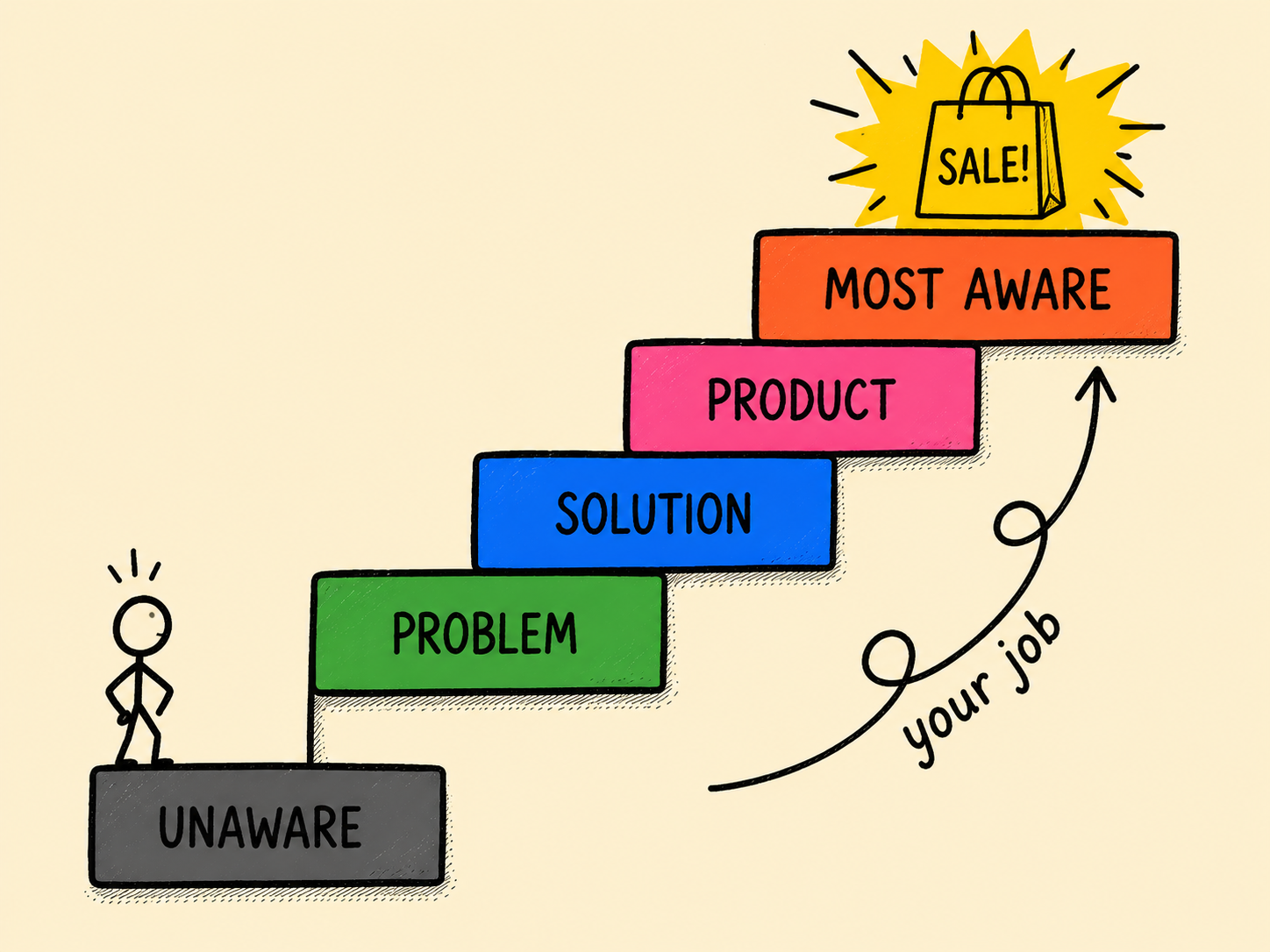
The five stages, in order
Eugene Schwartz wrote this framework in 1966. Sixty years later, every senior copywriter still uses it. There is a reason it has lasted.
A reader is in one of five stages when your copy reaches them.
Unaware
Doesn't know they have a problem yet. Selling to them is hard, and rarely worth it.
Problem-aware
Feels the pain. Doesn't yet know there's a category of solution. The biggest, most ignored audience.
Solution-aware
Knows the category. Hasn't picked a product. Reading and comparing.
Product-aware
Knows your product specifically. Hasn't bought yet. Wants a reason to act now.
Most-aware
Already a buyer or a fan. Open to upsells, renewals, and word-of-mouth asks.
The mistake every beginner makes is writing copy for stage 4 when most of their audience is stuck on stage 2. The result is an ad that sounds reasonable to the brand and invisible to everyone else.
The "evening hunger" example, rewritten five ways
Same product, same brand, same offer. Five copies, each pitched at a different stage.
Unaware | "What if you ate dinner like the people in Okinawa?" The reader didn't know there was a problem with how they eat. You are starting a conversation, not asking for a sale. Long lead time, expensive to convert.
Problem-aware | "Why your evening hunger isn't willpower." The reader feels the hunger. They blame themselves. You are giving them a different story. They will read this. They have not yet decided that the answer is a shake.
Solution-aware | "How to pick a protein shake that doesn't taste like sand." The reader has accepted that protein shakes might be the answer. Now they are comparing. You are positioning against the alternatives.
Product-aware | "Get 25% off Plant Pure protein this week." The reader knows your brand. They've been on the page. The job of the copy is to remove the last bit of friction.
Most-aware | "Restock for May | new flavour added." The reader is a buyer. The copy is a nudge.
If you serve the third headline to a stage-2 reader, they scroll past. They don't know they need a shake yet. You haven't earned the right to compare brands of a thing they haven't agreed they want.
Why most beginner copy fails this test
Beginners write at stage 4 because the brand brief is written at stage 4.
The brand knows their own product. The brand knows their features. The brand has been arguing with their team about positioning for three months. By the time the brief reaches the copywriter, the team is already deep in product-aware land. They write the brief in product-aware language. The copywriter dutifully writes product-aware copy. The ad runs to a problem-aware audience. The ad flops.
The fix is to push the brief one stage earlier than the brand wants.
If the brand thinks the audience is product-aware, write for solution-aware first and test up. If the brand thinks the audience is solution-aware, write for problem-aware and test up. The lower stage almost always wins for cold traffic, because cold traffic is mostly problem-aware no matter what the brand wants to believe.
Where to find what stage your audience is at
You don't have to guess.
Open three places before you write a single line.
The first is your brand's reviews | Amazon, Google, Trustpilot, whatever applies. Read 30 of them. The five-star reviews tell you what stage 4 and 5 readers value. The one- and two-star reviews tell you which objections are killing the deal.
The second is Reddit, Quora, and the comments on YouTube videos in your category. This is stage-2 territory. Real people describing the problem in their own words, with no marketing layer on top. Steal their language. Word-for-word.
The third is your own customer-support inbox. Read the last 50 emails. Look for the questions a customer asks before they buy and immediately after they buy. Those questions are your headlines.
You will leave these three places knowing exactly what stage most of your audience is at, and what words they use to describe their problem. The rest is shape.
The two-question test for any piece of copy
Before you publish anything, ask yourself:
Question one: what stage am I writing for?
Question two: what stage is most of my audience actually at?
If the answers don't match, you have a leak. Either rewrite the copy for the lower stage, or change where the copy runs so it reaches the higher-stage audience.
That is the whole skill. The frameworks just give you names for what your audience is feeling, so you stop guessing.
The reader doesn't move up the ladder because you tell them to. They move up because you meet them on the rung they're already standing on.
Take any ad in your portfolio, or any landing page in the wild. Write down which of the five stages it's aimed at. Then visit the page where the ad runs and write down which stage you think most viewers are actually at. If they don't match, you've found a leak. Fix it before lunch.
Most cold traffic is problem-aware. Most copy is written for product-aware. That gap is where the money leaks. Write for the rung your reader is on, not the rung the brand wishes they were on.